
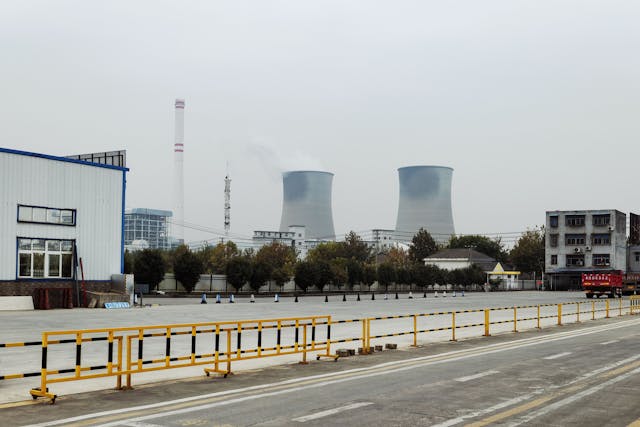
India’s manufacturing sector is undergoing a big change. Once known for its traditional strengths, it’s now being transformed by the energy and creativity of startups. Together, established factories and new companies are shaping an ecosystem that could change the direction of the entire economy. Manufacturing already makes up about 16-17% of India’s GDP and gives jobs to over 27 million people. Now, thanks to government support, new technology, and entrepreneurs who can turn research into real products, the sector is evolving rapidly. This isn’t just a small step forward but it’s a whole new way of thinking about and building things in India.
The Manufacturing Momentum: Scale Meets Innovation
The manufacturing sector’s recent performance metrics reveal a story of accelerating growth against global headwinds. Manufacturing output expanded by 5.4% in July 2025, a substantial improvement from earlier quarters, with the HSBC India Manufacturing PMI reaching a 16-month high of 59.1 reflecting the fastest improvement in operating conditions in over 17 years. This momentum stems from robust domestic demand, rising factory orders, and strategic capacity expansions across key sectors including basic metals, electrical equipment, and motor vehicles.
What makes this period of industrial growth different is how intentionally startups are being brought into the world of traditional manufacturing. According to a government review, since 2016, India has seen over 201,000 recognized startups, which have created more than 2.1 million jobs. Impressively, 48% of these startups are led by women, showing that opportunities are opening up for everyone. This wave of entrepreneurship is changing entire sectors, especially electronics, where exports jumped from $29.1 billion in 2023-24 to $38.6 billion in 2024-25, and could reach as high as $46-50 billion next year.
The Production-Linked Incentive scheme, spanning 14 critical sectors with investments exceeding Rs. 1.88 lakh crore realized by June 2025, has generated incremental production of over Rs. 17 lakh crore and exports crossing Rs. 7.5 lakh crore. These figures transcend mere statistics; they represent manufacturing facilities being established, supply chains being localized, and technological capabilities being internalized transforming India from a cost-based production hub into an innovation-driven manufacturing powerhouse.
Deep Tech and Hardware: The New Frontier of Manufacturing Innovation
The emergence of deep tech startups represents perhaps the most significant evolution in India’s manufacturing landscape. Unlike the consumer-focused digital ventures that dominated the previous decade, today’s manufacturing-related startups are tackling fundamental technological challenges in semiconductors, robotics, aerospace, biotechnology, and advanced materials. Deep tech investments reached $324 million across 35 deals in the first four months of 2025 alone which is more than double the $156 million invested during the same period in 2024 signaling growing investor confidence in capital-intensive, long-gestation innovation.
This shift toward hardware-led innovation carries profound implications for manufacturing competitiveness. Mindgrove Technologies achieved a critical milestone by taping out a 28nm Secure-IoT chip using the open-source Shakti core developed at IIT Madras, demonstrating that world-class semiconductor design capabilities can be cultivated domestically. Similarly, Agnikul Cosmos’s successful launch of a rocket powered by a single-piece 3D-printed engine showcases India’s growing prowess in aerospace and additive manufacturing technologies that directly enhance manufacturing precision and efficiency.
The hardware innovation ecosystem is supported by a maturing infrastructure of prototyping laboratories, shared testing facilities, and academic-industry partnerships. Institutions like IIT Madras, IIT Bombay, and IISc Bangalore have become crucibles of innovation where research transitions to commercial application. The government’s Rs. 10,000 crore Deep Tech Fund of Funds, announced in the Union Budget 2025 and administered by SIDBI, specifically targets startups working in AI, quantum computing, robotics, and biotech addressing the notorious “valley of death” between proof-of-concept and commercialization that has historically plagued hardware ventures.
The engineering hardware sector is projected to scale to $296 billion by 2034, according to a comprehensive report by CII, KPMG, and Synopsys. This trajectory is being driven by the convergence of manufacturing demand with startup agility, creating opportunities in clean tech, defense electronics, and advanced manufacturing that were previously dominated by imports. Over 53% of hardware startups cite access to digital tools and 55% identify affordable design technologies as critical barriers challenges that ecosystem players are actively addressing through shared infrastructure and government support programs.
Opportunities: Innovation as Manufacturing’s Competitive Edge
The symbiosis between manufacturing and startups creates multiple opportunity vectors that extend beyond traditional industrial paradigms. First, Industry 4.0 technologies in automation, Internet of Things, artificial intelligence, and cloud computing are being deployed not merely as efficiency tools but as fundamental re-imaginings of production processes. Manufacturing facilities increasingly integrate real-time data analytics, predictive maintenance systems, and adaptive production lines that can rapidly reconfigure based on demand signals. Only a fraction of Indian companies currently operates at global digital standards, presenting an enormous opportunity for startups offering Industry 4.0 solutions tailored to India’s unique manufacturing context.
Second, the global supply chain reconfiguration driven by geopolitical tensions and pandemic disruptions has positioned India as a preferred alternative to China-centric manufacturing. The “China+1” strategy adopted by multinational corporations is attracting substantial foreign direct investment, with FDI inflows reaching a provisional $81.04 billion in FY 2024-25—marking a 14% year-on-year increase. This capital influx is not merely financial; it brings technology transfer, global best practices, and integration into sophisticated supply networks. Manufacturing clusters in sectors like mobile phone assembly have achieved a 97% domestic content ratio compared to single digit levels in 2015, demonstrating rapid capability development.
Third, the startup ecosystem is creating entirely new categories of manufacturing related services and products. Startups focused on embedded systems, precision sensors, specialized components, and manufacturing software are enabling existing manufacturers to upgrade capabilities without massive capital expenditure. The fabless semiconductor model, designing chips domestically while manufacturing abroad exemplifies how startups can drive innovation without requiring multi-billion dollar fabrication facilities. This approach reduces barriers to entry while building critical design expertise that forms the foundation for eventual domestic manufacturing capacity.
Fourth, sustainability and clean technology represent both a moral imperative and a commercial opportunity. Manufacturing accounts for substantial environmental impact, and the transition to green manufacturing processes creates opportunities for startups developing renewable energy systems, circular economy solutions, waste-to-value technologies, and carbon emission monitoring platforms. The Union Budget 2025-26 allocated Rs. 20,000 crore each to nuclear energy and rooftop solar expansion, signaling government commitment to clean manufacturing that startups can leverage.
Navigating Multifaceted Challenges
Despite momentum, India’s manufacturing-startup integration confronts structural challenges that demand systemic solutions. The skills gap remains acute, with only 4.7% of India’s workforce having formal skill training compared to 96% in South Korea. Manufacturing increasingly requires expertise in automation, robotics, data analytics, and advanced materials, capabilities that traditional vocational training has not adequately addressed. The mismatch between academic curricula and industrial requirements creates a paradox: abundant labor coexists with scarcity of appropriately skilled workers.
Infrastructure deficiencies continue constraining manufacturing growth. Freight costs constitute 13-14% of GDP versus 8-10% in developed economies, largely due to modal imbalances and port congestion that delay exports and inflate inventory costs. Power interruptions compel manufacturers to maintain 15-20% captive generation capacity, increasing production costs even as grid tariffs remain among Asia’s highest. While the National Infrastructure Pipeline earmarks $1.45 trillion for upgrades, execution lags may continue limiting manufacturing potential until bandwidth, rail connectivity, and last-mile road linkages are comprehensively addressed.
Access to capital, particularly risk capital for hardware-heavy ventures, remains constrained. Deep tech requires patient capital willing to endure 3-5 year development cycles before commercial viability. While early-stage deep tech funding has increased, the ecosystem lacks the depth of later-stage funding necessary to scale innovations from prototype to mass manufacturing. The average compliance cost for manufacturing MSMEs ranges between Rs. 13-17 lakh annually, significantly impacting profitability and constraining the capital available for innovation and expansion.
Regulatory complexity, despite improvements, continues challenging smaller manufacturers and startups. Multiple layers of compliance across state and central regulations create friction that larger corporations can navigate but which disproportionately burdens emerging ventures. Intellectual property protection, while strengthening, requires further enforcement mechanisms to ensure innovators can safeguard and monetize their developments. Without robust IP protection, startups face risks when partnering with larger manufacturers or licensing technologies.
The semiconductor sector exemplifies both opportunity and challenge. India has committed $18 billion across 10 semiconductor projects with ambitious targets to reach $100-110 billion in market size by 2030. However, semiconductor manufacturing presents formidable barriers: capital investments of $10-20 billion per leading-edge facility, highly specialized equipment from limited suppliers, and process expertise requiring years to develop. Historical attempts by countries including Malaysia and Thailand demonstrate the difficulty of building competitive chip industries without sustained commitment and ecosystem depth.
Ethical Dimensions: Manufacturing with Responsibility
The rapid automation and technological transformation of manufacturing raises profound ethical considerations that transcend efficiency metrics. Job displacement constitutes the most immediate ethical concern. As machines become capable of performing tasks previously executed by humans, particularly in routine manufacturing operations, the risk of structural unemployment increases. Manufacturing sectors employing semi-skilled workers in assembly, welding, packaging face accelerating robotic automation that may displace workers unable to transition to evolving roles. Research suggests that approximately 57% of firms perceive a risk of job displacement from automation absent adequate reskilling programs.
This displacement disproportionately affects vulnerable populations in regions where manufacturing constitutes the primary employment base. Factory closures in communities already experiencing economic hardship trigger cascading effects: loss of livelihoods, social instability, and impediments to sustainable development goals focused on poverty reduction and decent work. The ethical imperative extends beyond individual displaced workers to encompass community resilience and social cohesion.
However, automation need not be inherently exploitative. Research frameworks distinguish between cost-focused automation which solely pursues labor reduction and socially responsible automation, which deploys technology to create better jobs while driving economic growth. Worker-centered automation augments human capabilities rather than replacing human judgment, fostering new forms of human-machine collaboration. Toyota’s manufacturing approach exemplifies this: workers manually produce goods initially, innovating and simplifying processes, with machines assuming control only after process perfection. This methodology empowers workers as innovation partners while building institutional knowledge that purely automated systems cannot replicate.
Transparency and algorithmic accountability represent critical ethical considerations as AI-driven systems increasingly govern manufacturing decisions. The “black box” nature of sophisticated AI algorithms makes understanding decision-making processes difficult, potentially embedding and perpetuating biases. In manufacturing contexts, opaque algorithms managing quality control, inventory optimization, or supplier selection can make unfair decisions that are difficult to identify and rectify. Ethical AI deployment requires explainability techniques that make decision processes transparent, diverse training data that mitigates bias, and continuous monitoring protocols.
The intensification of workplace surveillance enabled by automation technologies raises concerns about worker autonomy and dignity. Manufacturing facilities can deploy sensors, cameras, and algorithmic management systems that monitor every aspect of worker performance, potentially creating oppressive environments that erode well-being. Ethical manufacturing must balance legitimate needs for quality assurance and process optimization with respect for worker privacy and autonomy. Technology should serve to reduce dangerous, monotonous work while preserving human creativity and judgment in complex tasks.
Supply chain ethics constitute another critical dimension, particularly as Indian manufacturing integrates into global value chains. Ensuring ethical practices throughout extended supply chains addressing child labor, environmental impacts, fair wages, and safe working conditions demands comprehensive oversight mechanisms. Technology offers solutions through blockchain-enabled supply chain tracking and real-time compliance monitoring, but implementation requires commitment that extends beyond regulatory compliance to embrace social responsibility as a core value.
Environmental ethics intertwine with manufacturing expansion. Industrial production generates substantial carbon emissions, resource consumption, and waste generation. The transition to sustainable manufacturing practices such as renewable energy adoption, circular economy principles, waste minimization, and lifecycle environmental assessment—represents both ethical obligation and economic opportunity. Startups developing clean manufacturing technologies can enable incumbent manufacturers to reduce environmental footprints while maintaining competitiveness.
Strategic Pathways Forward: Building an Integrated Ecosystem
Converting India’s manufacturing momentum and startup energy into sustained global leadership requires deliberate strategic choices across multiple dimensions. First, workforce development must transition from reactive training to proactive ecosystem building. The Skill India Program having fund of Rs. 8,800 crore restructuring and extending through 2026 represents a foundation, but deeper integration between educational institutions, industry needs, and emerging technology requirements is essential. Apprenticeship models that combine theoretical learning with hands-on manufacturing experience, continuous upskilling pathways that enable workers to evolve with technological change, and specialized programs in deep tech domains like semiconductor design and robotics will create the human capital foundation for advanced manufacturing.
Second, manufacturing ecosystem development must emphasize clusters and supply chain depth rather than solely focusing on anchor companies. Nations that achieved manufacturing leadership such as China, South Korea built robust MSME networks, component manufacturing bases, and efficient logistics infrastructure that enabled innovation, cost efficiency, and supply chain resilience. India must replicate this depth through industrial corridor development, supplier capability programs, and collaborative platforms where startups, MSMEs, and large manufacturers co-create solutions.
Third, capital formation mechanisms specifically designed for hardware and deep tech ventures must mature. Patient capital vehicles willing to support 5-7 year development cycles, milestone-based funding structures aligned with technological validation gates, and risk-sharing mechanisms between government and private capital can bridge the funding gap that currently constrains hardware innovation. The Deep Tech Fund of Funds represents progress, but scaling requires orders of magnitude more capital and institutional sophistication.
Fourth, regulatory frameworks must evolve from compliance-focused to enablement-oriented. Single-window clearance systems that genuinely integrate approvals across agencies, risk-based compliance approaches that reduce burden on verified companies, and forward-looking regulations that anticipate rather than react to technological change will accelerate manufacturing innovation. Intellectual property frameworks must strengthen enforcement while facilitating knowledge transfer and licensing arrangements that enable startups to monetize innovations.
Fifth, infrastructure development physical and digital both must accelerate. Manufacturing competitiveness ultimately depends on logistics efficiency, reliable power, digital connectivity, and specialized facilities like testing laboratories and prototyping centers. Public-private partnerships can leverage government resources with private sector execution capabilities to build infrastructure that serves ecosystem needs rather than individual companies.
Sixth, ethical frameworks must be proactively embedded in manufacturing transformation rather than retroactively imposed. Establishing industry-wide principles for responsible automation, creating worker transition support mechanisms, implementing algorithmic transparency standards, and fostering stakeholder dialogues that include workers, communities, and civil society can ensure that manufacturing growth advances social welfare alongside economic metrics.
Conclusion: Manufacturing India’s Future
India’s industrial growth and startup ecosystem convergence represents more than sectoral evolution as it embodies a nation re-imagining its place in global production networks while addressing domestic development imperatives. The statistics are compelling: over 200,000 startups, $81 billion in annual FDI, manufacturing output growing at 4.26%, and deep tech investments doubling year-on-year. Yet beneath these figures lies a more profound transformation: entrepreneurs building semiconductor companies in tier-2 cities, traditional manufacturers integrating AI-driven quality systems, research institutions spinning out aerospace ventures, and workers acquiring skills for automated production lines.
The path forward demands balancing competing imperatives: economic growth and environmental sustainability, technological automation and worker welfare, global competitiveness and local community development, startup agility and institutional stability. This balance is achievable not through choosing one over another but through synthesizing them into an integrated approach where economic prosperity, social equity, and environmental responsibility mutually reinforce rather than conflict.
The opportunity is time-bound. Global supply chains are re-configuring, technological capabilities are democratizing, and India possesses demographic, institutional, and policy advantages. Converting this potential into reality requires sustained commitment, robust ecosystem , ethical consciousness, and execution excellence.Transformation of “Manufacturing” through startup innovation can generate prosperity, create meaningful employment, solve pressing problems, and position India as an indispensable node in the global economy. India has challenges which prompt build resilience, capability, and competitive advantage that endure beyond market cycles and technological generations.